
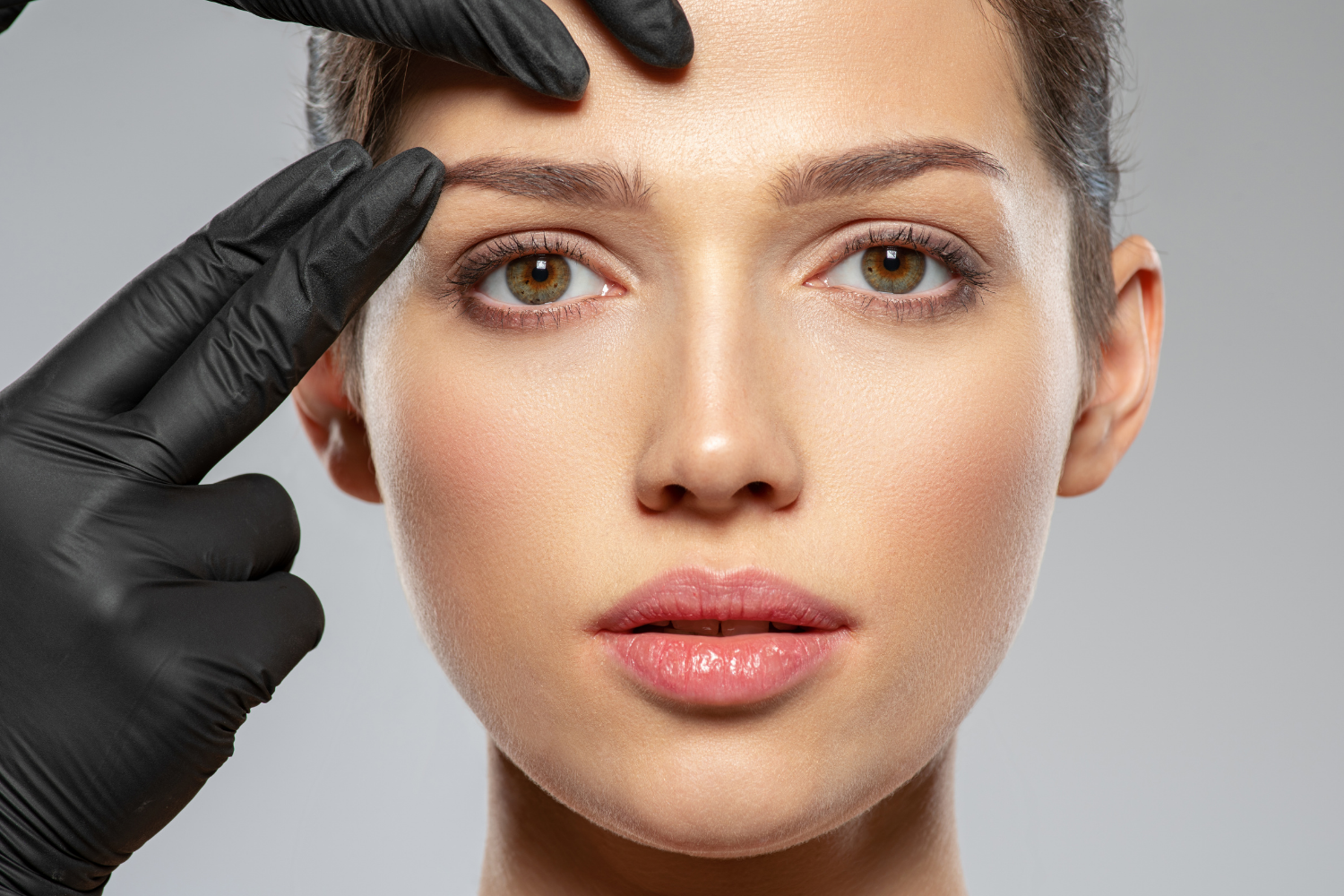
Brow position affects how your entire face reads, often more than people realize. A low or heavy brow can make someone look tired, angry, or sad even when they feel none of those things, and no amount of rest or good mood changes that expression. A brow lift addresses this directly by repositioning the brow and forehead tissue to restore a more open, rested appearance.
Key Takeaways
- A brow lift raises and repositions the brow and forehead tissue, correcting descent that no other procedure directly treats
- Low brow position is often mistaken for excess upper eyelid skin, which is why brow lift and upper blepharoplasty are frequently confused
- Chronic forehead muscle use to compensate for a low brow can mask true brow position until that muscle is addressed
- Recovery involves temporary forehead numbness and tightness, which is a normal part of healing, not a complication
- Because a brow lift repositions tissue structurally, results are considerably longer-lasting than temporary options like neuromodulator injections
What Is a Brow Lift?
A brow lift, also called a forehead lift, is a surgical procedure that raises and repositions the eyebrows and forehead tissue to correct a low, heavy, or sagging brow. By lifting the brow into a more youthful position, it can soften deep horizontal forehead lines, reduce the vertical furrows between the brows, and open up the upper eye area without touching the eyelids themselves.
Why the Brow Descends: Understanding Forehead Aging
As skin loses elasticity and the muscles and connective tissue supporting the forehead loosen over time, the brow gradually settles lower on the face. This descent doesn't just affect the forehead. It changes how the entire upper eye area looks, often contributing to hooding that gets mistaken for an eyelid problem.
One nuance that's easy to miss: some patients unconsciously use their forehead muscle to hold their brows up, compensating for a brow that's already lower than it appears at rest. This can mask the true extent of brow descent, sometimes until that muscle relaxes, whether through age, fatigue, or a neuromodulator like Botox, and the actual brow position becomes visible. This is one reason an experienced surgeon evaluates brow position with the forehead fully relaxed, not just how you naturally hold your expression.
Signs You May Benefit From a Brow Lift
- A low or heavy brow position, particularly at the outer corners
- Deep horizontal forehead lines from chronic muscle compensation
- Vertical furrows between the brows from frowning muscles
- Hooding at the outer corners of the eyes that's caused by brow position rather than eyelid skin
- A resting expression that reads as tired, angry, or sad regardless of how you actually feel
Brow Lift vs. Upper Blepharoplasty: How to Tell Which You Need
This is one of the most common points of confusion in facial rejuvenation, since both procedures can improve hooding at the upper eye. They correct different things.
Brow Lift
- Addresses the position of the brow and forehead
- Corrects lateral hooding caused by a low brow
- Can soften horizontal forehead lines and vertical furrows between the brows
- Does not remove excess skin from the eyelid itself
Upper Blepharoplasty
- Addresses excess skin and, when present, fat on the upper eyelid itself
- Does not change the position of the brow
- Will not correct hooding that's actually caused by brow descent
Many patients need both, since a low brow and excess eyelid skin frequently occur together. A simple way to get a sense of which is contributing more: gently lift your brow with your fingers into a natural position. If the hooding at your outer eye largely disappears, brow position is likely a meaningful factor. A surgical evaluation is the only reliable way to confirm which procedure, or combination, is right for you.
Types of Brow Lift Techniques
Brow lift techniques vary in invasiveness and incision approach, and the right one depends on your anatomy, the degree of correction needed, and your surgeon's assessment.
- Endoscopic brow lift: Uses small incisions hidden within the hairline and a camera-guided approach, generally allowing for less visible scarring and a faster recovery than older techniques.
- Temporal or lateral brow lift: A more limited approach focused on the outer brow, often appropriate when hooding is concentrated at the outer corners rather than across the full forehead.
- Open or coronal brow lift: A more traditional approach involving a longer incision, sometimes used for more significant correction or specific hairline considerations.
Which technique is appropriate for your anatomy is something your surgeon will determine during consultation, not something to decide based on general information alone.
Who Is a Good Candidate for a Brow Lift?
Good candidates typically:
- Have visible brow descent contributing to a tired, heavy, or aged upper face
- Have forehead lines or furrows that bother them, particularly if they've relied on makeup or styling to compensate
- Understand that a brow lift addresses brow and forehead position specifically, not excess eyelid skin
- Are in good general health with realistic expectations about the degree of change
What the Procedure Involves
A brow lift is typically performed as an outpatient procedure, with the type of anesthesia depending on the specific technique and whether it's combined with other surgery. Incisions are placed to minimize visibility, most commonly hidden within the hairline, and the forehead and brow tissue is repositioned and secured in its new position. The procedure generally takes one to two hours, longer if combined with additional facial rejuvenation procedures.
Recovery: What to Expect
Days 1 to 3: Swelling and bruising are most significant. Temporary forehead tightness or numbness is common and expected as part of normal healing, not a sign of a problem.
Week 1: Bruising begins to fade, and many patients feel comfortable in low-key social settings.
Weeks 2 to 3: Swelling continues to resolve, and forehead sensation gradually starts to normalize as nerves recover.
Months 1 to 3: The brow settles into its final position, and results become clear as any residual swelling resolves.
How Long Do Brow Lift Results Last?
Because a brow lift repositions the underlying tissue structurally, results are considerably longer-lasting than temporary options. While the forehead continues to age naturally afterward, the corrected brow position itself typically holds for many years, which is meaningfully different from temporary approaches that only relax muscle activity.
Brow Lift vs. Botox for Forehead Lines
Neuromodulator injections like Botox are often the first thing patients try for forehead lines, and they can be genuinely effective for early, dynamic lines caused by muscle movement. But they work differently than a brow lift and address a different problem.
- Neuromodulator injections: Temporarily relax the muscles causing forehead lines and furrows; do not change brow position; require repeat treatment every few months
- Brow lift: Physically repositions the brow and forehead tissue; addresses brow descent directly, not just muscle activity; results are surgical and long-lasting
For patients whose primary concern is brow position and heaviness rather than dynamic lines from muscle movement, a brow lift addresses the actual structural cause rather than temporarily managing a symptom.
Combining a Brow Lift with Other Procedures
A brow lift is frequently combined with other facial rejuvenation procedures for a more complete result:
- Upper Blepharoplasty: Addresses excess eyelid skin alongside brow position for a fully open, refreshed upper eye area.
- Deep Plane Facelift: Combines brow and forehead rejuvenation with correction of the midface, jowls, and neck in a single operative session.
- CO2 Laser Skin Resurfacing: Improves forehead skin texture and fine lines that a brow lift alone does not treat.
Taking the Next Step
Brow position is one of the more overlooked contributors to how tired or aged the upper face can look, and correcting it often changes a patient's expression more than they anticipated. Dr. John Luck evaluates brow position, forehead muscle activity, and eyelid anatomy together during consultation to determine what's actually contributing to your concern.
Schedule a consultation with Dr. Luck to find out whether a brow lift, upper blepharoplasty, or a combination of both is the right path for you.
Frequently Asked Questions
What does a brow lift do?
A brow lift raises and repositions the eyebrows and forehead tissue to correct a low, heavy, or sagging brow, which can soften forehead lines and open up the upper eye area without touching the eyelids themselves.
Do I need a brow lift or upper eyelid surgery?
It depends on whether hooding at your eyes is caused by brow position or excess eyelid skin. Gently lifting your brow to see if hooding improves can offer a clue, but a surgical evaluation is the only reliable way to confirm which procedure you need.
How long do brow lift results last?
Because a brow lift repositions tissue structurally rather than temporarily relaxing muscles, results typically last many years, considerably longer than temporary options like neuromodulator injections.
Is a brow lift the same as Botox for forehead lines?
No. Botox temporarily relaxes the muscles causing forehead lines but does not change brow position. A brow lift physically repositions the brow and forehead tissue and produces long-lasting results.
What does brow lift recovery involve?
Swelling and bruising peak in the first few days, with temporary forehead numbness or tightness that's a normal part of healing. Most patients feel comfortable socially within about a week, with final results visible over one to three months.
Can a brow lift be combined with other procedures?
Yes. It's commonly combined with upper blepharoplasty, a deep plane facelift, or CO2 laser resurfacing to address the brow, eyes, and overall facial rejuvenation together.