
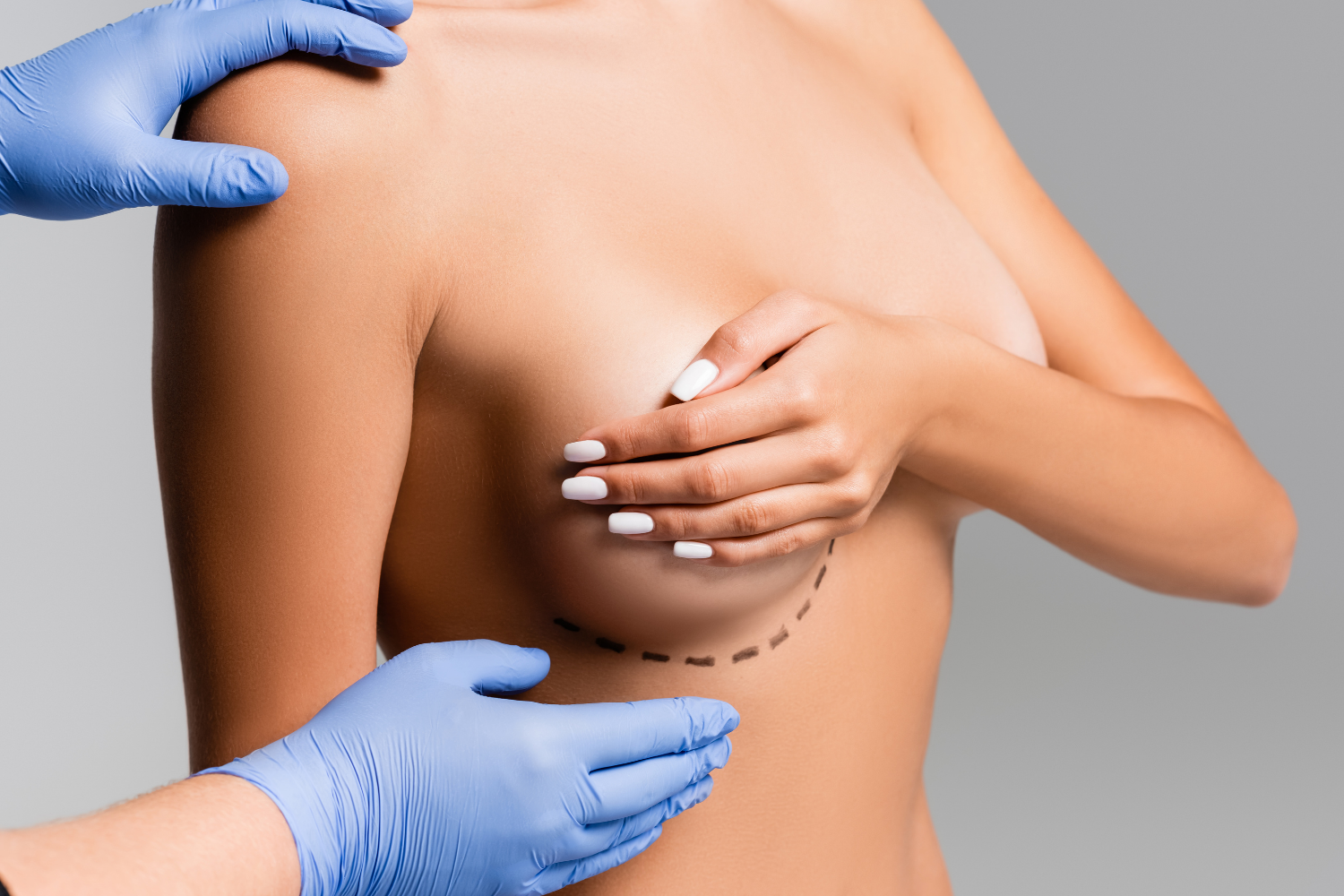
More women are choosing to have their breast implants removed, whether their goals have changed, they're dealing with capsular contracture or another complication, or they simply want to return to their natural breast tissue after years of living with implants. Whatever the reason, one of the most common questions is also the most practical: what does recovery actually look like, week by week?
Unlike breast augmentation, where most of the information available online focuses on choosing implant size and shape, explant surgery gets far less detailed coverage, even though the decision to remove implants is often just as significant and just as personal. Patients considering explant deserve the same level of honest, specific guidance about what their body will actually go through.
Below, we'll walk through why patients choose explant surgery, what actually happens during the procedure, a realistic week-by-week recovery timeline, and whether a lift is likely to be part of the plan.
Key Takeaways
- Breast explant surgery (implant removal) is typically an outpatient procedure performed under general anesthesia, usually taking one to two hours
- Recovery is generally shorter and more comfortable than the original implant surgery, especially if no capsulectomy or lift is performed at the same time
- Removing the scar capsule (capsulectomy) alongside the implants adds some recovery time compared to implant removal alone
- Most patients feel comfortable returning to desk work within a week, with full recovery from strenuous activity by four to six weeks
- Patients with significant skin laxity may benefit from a breast lift performed at the same time or in a staged second procedure
Why Do Patients Choose Breast Explant Surgery?
There isn't a single, universal reason patients pursue explant surgery, which is part of why the conversation deserves more nuance than it typically gets. Some patients are responding to a change in personal preference or lifestyle, wanting a smaller, more natural profile than the one they chose years earlier. Others are addressing capsular contracture, where scar tissue around the implant tightens and can cause discomfort or visible distortion, or are concerned about implant rupture or aging implants that have been in place for many years. A smaller group of patients report symptoms sometimes associated with breast implant illness, which some find improve after explant, even though the relationship between implants and those symptoms isn't fully understood medically. Understanding your own reason matters, because it shapes the surgical plan: a patient explanting due to capsular contracture will likely need a capsulectomy, while a patient explanting purely for size preference with excellent skin quality may need very little beyond implant removal itself.
What Actually Happens During Breast Explant Surgery?
Breast explant surgery removes the implants through an incision, most often placed along the original scar from the implant surgery, typically at the fold under the breast or around the areola, which avoids creating a new scar in most cases. In many cases, the surgeon also removes some or all of the scar capsule that formed around the implant, a step called a capsulectomy. A partial capsulectomy removes only the portion of the capsule causing problems, while a total, or "en bloc," capsulectomy removes the entire capsule as a single unit, which is sometimes recommended when there are specific concerns about the capsule itself. A capsulectomy addresses causes like capsular contracture and can reduce the risk of ongoing discomfort, though it does add some additional recovery time and surgical complexity compared to implant removal alone.
What Does Recovery Actually Look Like, Week by Week?
In the first two to three days, swelling and tenderness are at their peak, and most patients wear a compression garment or supportive bra to help the tissue settle. Pain is generally more manageable than after the original implant surgery, since no new implant is putting tension on the tissue, though some patients notice their breasts look and feel unusually soft or deflated during this window, which can be an unexpected emotional adjustment even when it's a normal part of healing. By the end of the first week, bruising has begun to fade and light daily activities are usually fine, though lifting anything over 5 to 10 pounds and any upper-body exercise should still be avoided.
By the second week, most patients feel comfortable returning to desk work and normal social activity, though some residual swelling and tenderness are still expected, particularly if a capsulectomy was performed. Swelling continues to resolve through the third and fourth weeks, when light cardio can typically resume, with a gradual return to upper-body strength training closer to the six-week mark, when most restrictions are lifted entirely. The breast tissue and skin continue to fully settle into their final shape over the following two to six months, and how much the skin retracts and tightens on its own varies significantly by patient, which is why final results take time to assess.
Will You Need a Lift After Explant?
One of the most important conversations to have before explant surgery is whether your skin and breast tissue are likely to retract well on their own, or whether a lift will be needed to address loose skin left behind after the implants are removed. This depends heavily on implant size, how long they were in place, your age, and your skin's natural elasticity. Some patients choose to have a lift performed at the same time as the explant, which avoids a second surgery and recovery period. Others prefer a staged approach: removing the implants first, waiting several months to see how much natural retraction occurs, and then deciding whether a second procedure is worthwhile.
Is Explant Ever Combined With Other Procedures?
Explant surgery is sometimes performed as part of a larger plan rather than in isolation. A breast lift, or mastopexy, addresses skin laxity left behind after implant removal by repositioning the breast tissue and nipple to a more youthful position, and in select patients, fat can be transferred to the breast at the time of explant to help maintain some volume without a silicone or saline implant, an approach sometimes called "explant with auto-augmentation." Whether either of these makes sense for you depends on your goals and your current anatomy, which is best assessed directly during a consultation rather than assumed from general information online. You can learn more about the full range of procedures we offer on our body and breast page.
READ: Body and Breast Procedures at Dr. Luck's Practice
What Should You Ask Before Your Explant Surgery?
It's worth asking directly whether your surgeon plans a partial or total capsulectomy and why, and what they expect your recovery to look like given your specific implant size and history. Based on your skin quality and implant history, it's also reasonable to ask whether a lift is likely, either now or later, and whether fat grafting or a staged approach might make more sense for your goals.
Taking the Next Step
Dr. John Luck is a Johns Hopkins-trained plastic surgeon in Minneapolis and Burnsville, MN, who works with patients through every stage of their breast surgery journey, including explant and revision. If you're considering having your implants removed and want an honest assessment of what your recovery and results would look like, schedule a private consultation to discuss your options.
Frequently Asked Questions
How long does it take to recover from breast explant surgery?
Most patients return to desk work within a week and resume full exercise by four to six weeks, though final results take several months to fully settle.
Is breast explant recovery easier than getting implants?
Generally, yes. Without a new implant adding tension to the tissue, most patients report less pain and a quicker return to normal activity, though a capsulectomy can add some recovery time.
Will I need a breast lift after removing my implants?
It depends on your skin elasticity, implant size, and how long the implants were in place. Some patients need a lift to address loose skin; others do not, and some choose to wait several months before deciding.
What is a capsulectomy, and does it affect recovery?
A capsulectomy removes the scar tissue capsule that formed around the implant. It's often necessary for issues like capsular contracture and adds some recovery time compared to implant removal alone.
Can fat be added back during explant surgery instead of new implants?
In select patients, fat grafting can be performed at the same time as explant to help maintain some volume without a silicone or saline implant. Whether this is a good option for you depends on your available fat and your goals.
You might also be interested in reading